
Is the US Department of Veterans Affairs (VA) defrauding veterans exposed to radioactive material (RAM) by denying medical care and compensation for their service-connected (SC) injuries? The answer is yes.
Official VA sources and regulations list 21 presumptive cancers (often described as 21 in VA brochures and fact sheets, though some group urinary tract or lung types together, leading to slight variations, such as 21–24 depending on the counting method) with additional non-presumptive cancers. The list focuses on cancers and does not include many non-cancer conditions linked to radiation (such as cataracts, non-malignant thyroid nodular disease, or certain brain tumors), which may require case-by-case review with evidence under 38 CFR § 3.311. Radiation-related disability claims have historically had low approval rates. In the first year after the PACT Act (roughly August 2022–August 2023), the VA denied approximately 86% of radiation-related claims, rejecting over 3,500 out of ~4,100 while approving around 570, according to VA data reported by NBC News.¹ Main reasons include unreliable/unavailable radiation dose records from DoD/DTRA, overclassified information, lack of confirmed diagnosis, or failure to meet service connection/eligibility rules. While the Veterans Benefits Administration (VBA) recognizes only about 20-24 presumptive conditions (cancers), with an approximate additional 22 cancers (non-presumptive). However, the Veterans Health Administration (VHA) bills insurance providers for an additional 62 medical conditions associated with exposure to ionizing radiation and/or radioactive material (RAM).
External Ionizing Radiation
- Very few military personnel and veterans were exposed to external ionizing radiation levels high enough or long enough to cause long-term health problems, except those who operated early-generation Navy reactors with insufficient shielding, atomic veterans from NTS tests, or Hiroshima/Nagasaki survivors.
- A dosimetry badge, or radiation badge, is used to estimate an external ionizing radiation dose for monitoring personnel exposure. They do not identify specific isotopes but rather estimate the total dose.
Contamination with RAM
- Contamination with RAM can lead to both external and internal exposure through inhalation, ingestion, or skin absorption.
- Internal doses are often considered more hazardous than external doses because energetic radiation is emitted from internally deposited RAM. The problem worsens with the duration for which radionuclides remain in the body.
- A whole-body counter is a highly shielded, sensitive device designed to precisely detect, identify, and measure small amounts of radioactive material in the body caused by ingestion or inhalation.
There have been hundreds of well-documented deaths caused by an individual’s exposure to RAM. Eben McBurney Byers, Marie Curie, the Radium Girls, and Alexander Litvinenko are just a few examples of people who died due to both external and internal exposure to RAM. Yet, the VA ignores the science and refuses to acknowledge the harmful and often fatal consequences of this environmental exposure.
Feres Doctrine
The Feres Doctrine bars active-duty military personnel from suing the federal government for injuries incurred during military service. Courts have long upheld this bar on the grounds that the VA provides an alternative remedy, medical care, and compensation. But if the VA is systematically denying both medical care and compensation to veterans exposed to radioactive material, that justification collapses. Has the government’s own failure to honor this obligation laid the groundwork for overturning Feres v. United States, 340 U.S. 135 (1950)?
International Classification of Diseases codes (ICD-10)
The ICD-10 codes for radiation-exposure illnesses are recognized by the National Library of Medicine, the CDC, the NIH, the WHO, and the Veterans Health Administration (VHA), but not by the Veterans Benefits Administration (VBA).
SNOMED CT
SNOMED CT is part of a group of designated standards used in US Federal Government systems for the electronic exchange of clinical health information.
The following illnesses can result from exposure to external ionizing radiation or from internal exposure when radioactive material (RAM) is inhaled, ingested, or absorbed through the skin.
Radiation-induced disorder – SNOMED CT Code/CD-10 Codes vs. Veterans Administration (VA)

Radiation-Induced Disorders SNOMED CT & ICD-10-CM Codes (PDF)
Radiation-Induced Disorders SNOMED CT & ICD-10-CM Codes (Excel spreadsheet)

Radiation-Induced Disorders Recognized by the VA (Excel spreadsheet)
A partial list of military personnel and veterans exposed to radioactive material (RAM).
- VA Radiation research veterans
- Chapter 1 of the Final Report of the Advisory Committee on Human Radiation Experiments (1995): "By 1974, according to VA reports, more than 2,000 human radiation experiments would be performed at VA facilities..."
- DoD Radiation research veterans
- "The United States department of defence has revealed that as many as 20 000 service veterans and their family members are at risk of radiation induced illnesses stemming from experimental treatments they received from the 1940s to the 1960s." https://pubmed.ncbi.nlm.nih.gov/9302949/)
- Atmospheric nuclear tests veterans
- NTPR Program has identified approximately 550,000 DOD personnel as participants in four main missions: post-WWII occupation of Hiroshima/Nagasaki, POWs in Japan, atmospheric nuclear tests (1945–1962), and underground testing (1951–1992).
https://www.dtra.mil/Portals/125/Documents/NTPR/newDocs/ATVCertificate/NTPR%20FS_AVSC%20(3-2020).pdf
- NTPR Program has identified approximately 550,000 DOD personnel as participants in four main missions: post-WWII occupation of Hiroshima/Nagasaki, POWs in Japan, atmospheric nuclear tests (1945–1962), and underground testing (1951–1992).
- Veterans who decontaminated aircraft involved in the open-air nuclear testing conducted at the Nevada Test Site (NTS).
- Approximately 300 Air Force personnel were involved in nuclear cloud-sampling work (including aircraft crew and ground decontamination/support) at each mission. https://www.gao.gov/assets/rced-87-134.pdf
- Davis-Monthan AFB, AZ
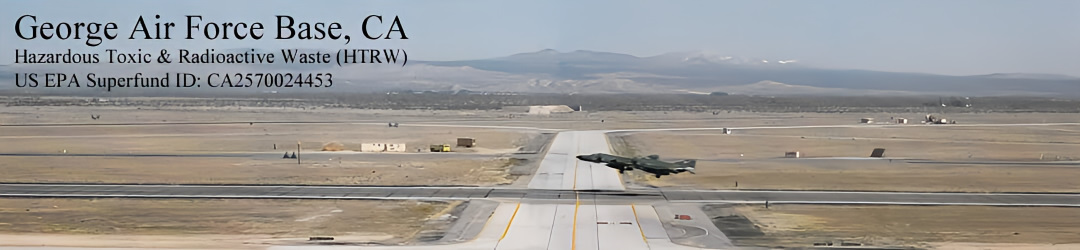
- George AFB, CA
- Holloman AFB, NM
- Indian Springs AFB / Creech AFB, NV
- Kirtland AFB, NM
- McClellan AFB, CA
- Nellis AFB, NV
- Norton AFB, CA
- Approximately 300 Air Force personnel were involved in nuclear cloud-sampling work (including aircraft crew and ground decontamination/support) at each mission. https://www.gao.gov/assets/rced-87-134.pdf
- Veterans who worked at the Nevada Test Site (NTS)
- There is no official total of U.S. veterans who worked at the NTS.
- Veterans who maintained early-generation nuclear weapons (non-sealed pits).
- There is no single, precise official total for the number of U.S. veterans who specifically maintained early-generation nuclear weapons
- Bikini Atoll and Enewetak Atoll, atomic cleanup veterans
- According to the VA, approximately 6,000 veterans participated in the cleanup.
https://www.publichealth.va.gov/exposures/radiation/sources/enewetak.asp
- According to the VA, approximately 6,000 veterans participated in the cleanup.
- Broken Arrow cleanup veterans: Palomares, Spain; Thule, Greenland; and various U.S. locations.
- Approximately 1,600 personnel were involved in the cleanup at Palomares, Spain. There is no reliable information on the number of veterans involved in all incidents.
https://pmc.ncbi.nlm.nih.gov/articles/PMC6837353/
- Approximately 1,600 personnel were involved in the cleanup at Palomares, Spain. There is no reliable information on the number of veterans involved in all incidents.
- GW I veterans (from the release of RAM when Saddam Hussein's nuclear weapons enrichment facilities (calutrons) were blown up)
- No VA, DoD, or congressional reports recognize a "radiation-risk activity" category for Gulf War veterans tied to calutron facility bombings.
- DU veterans
- There is no single official total for all potentially exposed veterans, as exposure levels varied widely (from high in friendly-fire incidents to low or negligible in most cases).
Definitions:
- International Classification of Diseases - Read Codes (ICD-10 codes)
- Systematized Nomenclature of Medicine - Clinical Terms (SNOMED-CT)
- External exposure to ionizing radiation
Exposure occurs when all or part of the body is exposed to a penetrating radiation field from an external source. Like a chest X-ray, the body can absorb this radiation during exposure or pass it entirely through. Note that exposure to a radiation field does not render an individual radioactive; radiation exposure ceases upon the individual's departure from the field. - External/Internal contamination with radioactive material (RAM)
The other type of radiation injury involves being contaminated with radioactive material (RAM). Contamination means the release of radioactive material into the environment in gaseous, liquid, or solid form. It contaminates people both externally (e.g., on the skin) and internally (via absorption, inhalation, and/or ingestion). Contamination with radioactive material may result in its incorporation into the body. This can result from the uptake of radioactive material by body cells, tissues, and target organs such as bone, liver, thyroid, or kidney. Radioactive materials are distributed throughout the body based on their chemical properties. For example, Iodine-125 is concentrated in the thyroid gland, as is non-radioactive iodine. - Department of Energy (DOE) classified radioactive material (RAM)
Restricted Data (RD), Formerly Restricted Data (RD), and Transclassified Foreign Nuclear Information (TFNI) - Department of the Air Force classified radioactive material (RAM)
The term "91(b)" refers to RAM covered under Section 91(b) of the Atomic Energy Act (AEA) of 1954.
Reference:
- Lehren, A., Strickler, L., & Ainsley, J. (2023, August 28). Atomic veterans overwhelmingly denied benefits for illnesses related to radiation exposure during service. NBC News. https://www.nbcnews.com/news/us-news/atomic-vets-overwhelmingly-denied-benefits-illnesses-related-radiation-rcna99474
- DOE-STD-1121-2008, Internal Dosimetry - DOE Standards
- NRC - Basic Concepts of Internal Dosimetry
- 38 CFR § 3.311 - Claims based on exposure to ionizing radiation
- Advisory Committee on Human Radiation Experiments 1995
VA Radiation-Induced Disorders — Reference Notes
REGULATORY REFERENCES:
- 38 CFR § 3.309(d) — Presumptive conditions for 'radiation-exposed veterans' (participated in nuclear tests, Hiroshima/Nagasaki occupation, etc.)
- 38 CFR § 3.311 — Radiogenic diseases; requires dose estimate and advisory opinion from VA Under Secretary for Health.
PRESUMPTIVE vs. RADIOGENIC:
- 'Yes' (Presumptive) = Listed under 38 CFR § 3.309(d)(2). Service connection is presumed if the veteran qualifies as a 'radiation-exposed veteran.'
- 'No' (Not Presumptive) = Listed only under 38 CFR § 3.311(b)(2) as a 'radiogenic disease.' Requires additional dose assessment and opinion.
SNOMED CT & ICD-10-CM CODES:
- The provided codes are representative or canonical. Specific subtypes may have more granular codes.
- SNOMED CT codes are from the International Edition. Clinical documentation may use different concept IDs.
SURVIVAL RATES:
- Approximate 5-year relative survival rates are based on SEER (NCI) data for all stages combined.
- Actual survival varies significantly by stage at diagnosis, histologic grade, age, and treatment.
- Non-malignant conditions (cataracts, thyroid nodular disease, parathyroid adenoma) are marked N/A.
'ANY OTHER CANCER' — 38 CFR § 3.311(b)(2)(xxiv):
- The VA includes a catch-all provision: any other cancer may be considered radiogenic on a case-by-case basis.
DISCLAIMER:
- This table is for informational and reference purposes only. It does not constitute legal or medical advice.
- Veterans should consult with a Veterans Service Organization (VSO) or a VA-accredited attorney for assistance with claims.
- Clinical coding should be verified against the current ICD-10-CM and SNOMED CT terminologies.
DTIC ADA136819 (HARDTACK I, 1958): Contains the most explicit official statement found to date: "Aircraft flying these sampling missions picked up significant amounts of radioactive material on their surfaces, posing additional and continuing radiation exposures to the aircrews as they returned to base, as well as to decontamination ground crews." This closes any evidentiary gap regarding the contaminated-aircraft-to-base chain.
Be the first to comment